What happens
interest-pause-form.component.ts renders its pickers immediately and fetches the pause afterwards. When the response arrives it writes into the same signals the user has been editing:
// :184
private loadPause(): void {
  if (!this.loanId || !this.variationId) return;

  this.pauseService.getLoansLoanIdInterestPauses(this.loanId).subscribe({
    next: (pauses) => {
      const pause = pauses.find(({ id }) => id === this.variationId);
      if (pause) {
        this.startDate.set(this.toFormDate(pause.startDate));   // unconditional
        this.endDate.set(this.toFormDate(pause.endDate));
      }
    },
Nothing disables the form while that request is outstanding and nothing checks whether the user has already touched the fields, so on a slow link the picked dates are replaced by the stored ones.
Reproduced against a live platform
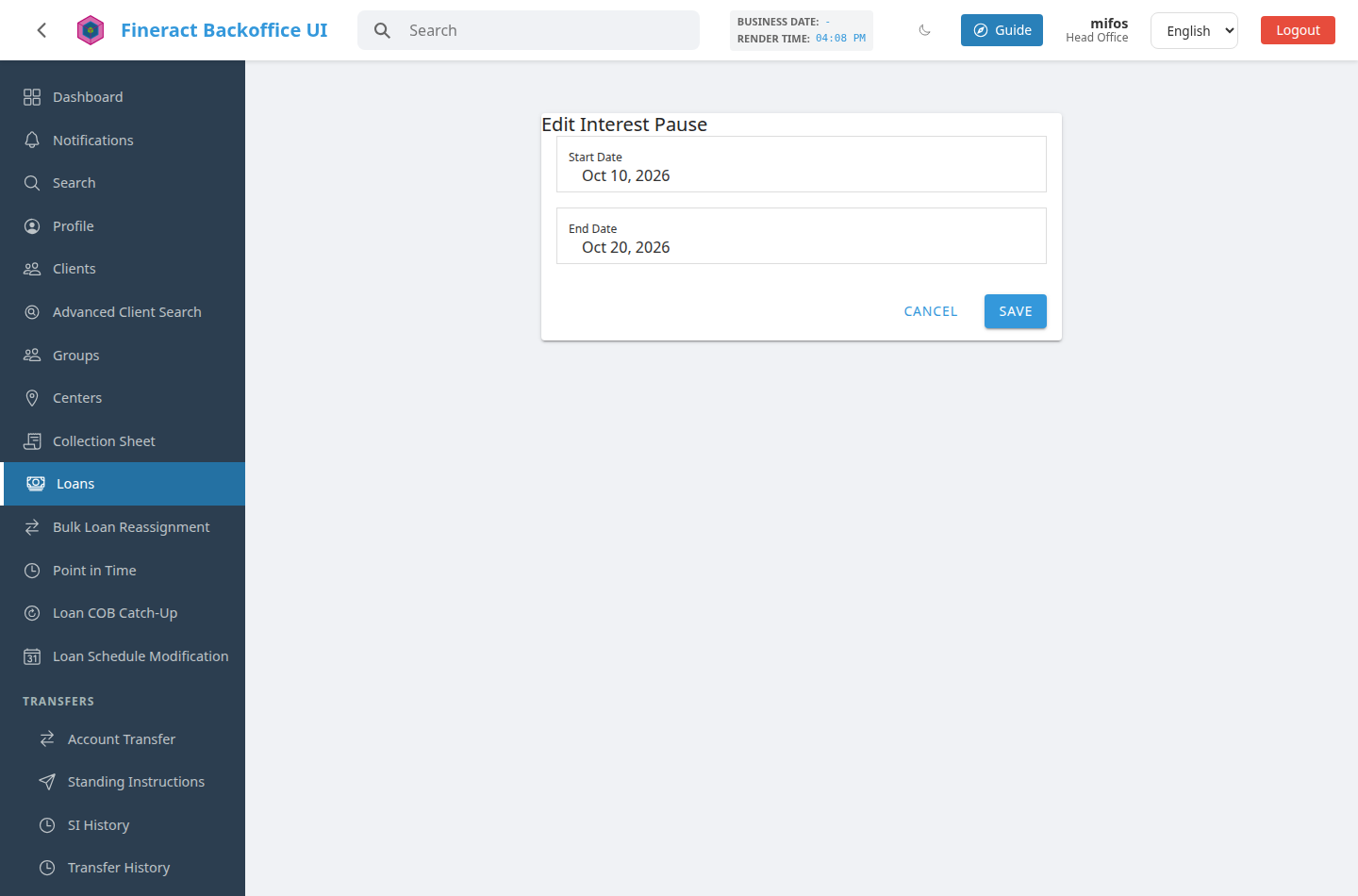
Loan 26, pause id 1 (2026-08-17 to 2026-08-27), with the populating GET held for five seconds — a delay, not a fabricated response. Dates picked while it was in flight:
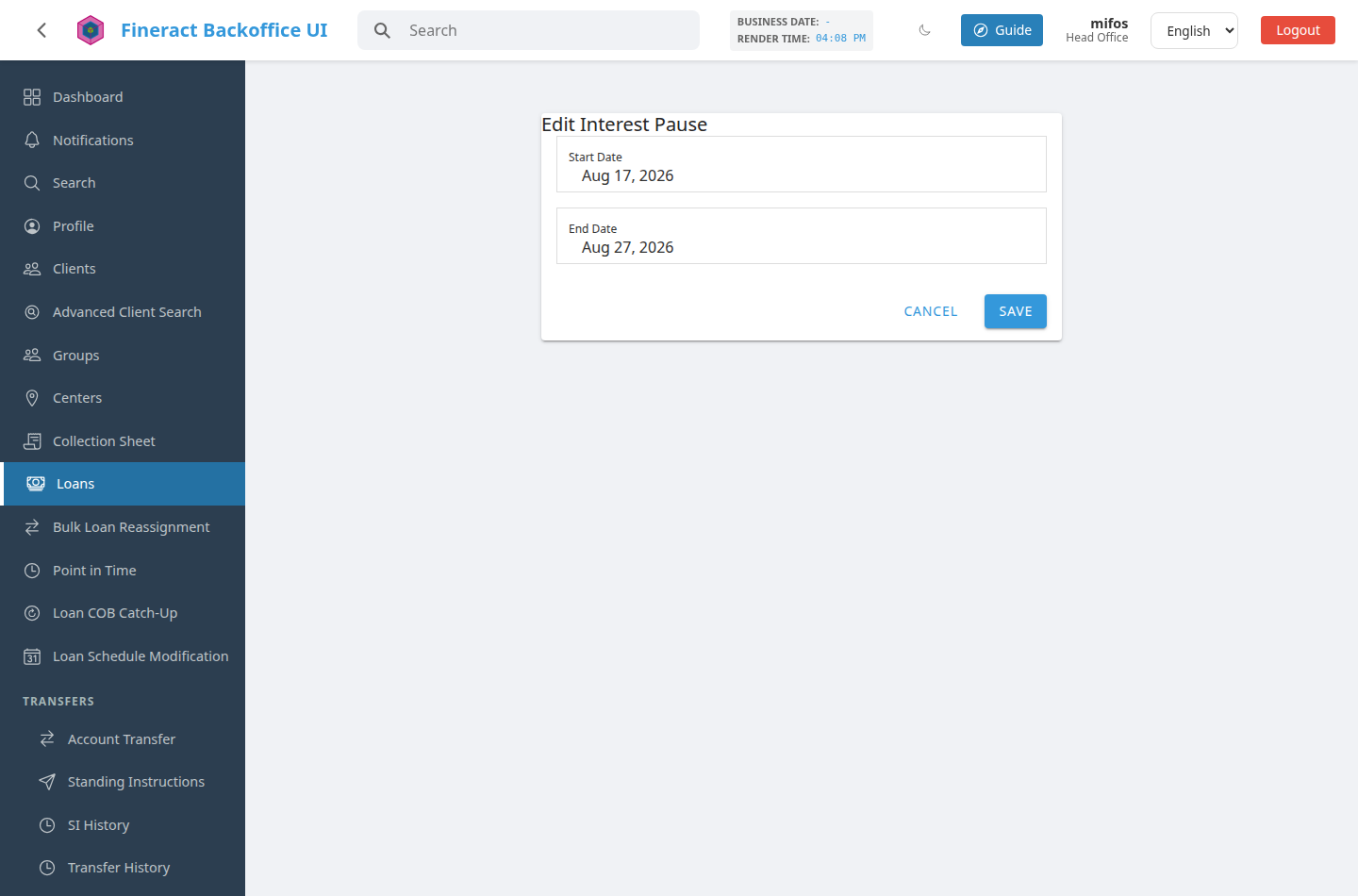
The same screen once the response landed:
Read off the controls directly:
stored pause     : 2026-08-17 .. 2026-08-27
user picked      : {"start":"2026-10-10","end":"2026-10-20"}
after GET landed : {"start":"2026-08-17","end":"2026-08-27"}
Screen recording.
Why it matters
The reversion is silent and it lands on a form the user is about to submit. Someone correcting a pause on a slow connection picks the right dates, watches them change back, and — if they do not happen to be looking at that moment — saves the values they meant to replace. The result is an unchanged relief period that the operator believes they corrected, on a loan where the pause range determines interest.
Five seconds is generous for a lab, but a field branch on a poor link is exactly where this bites, and it is also the setting where a user is most likely to start typing before the screen has settled.
Suggested fix
Do not let a late response win over a user edit. Two workable shapes, in rough order of preference:
- Do not show editable controls until the data is there. A loading state over the form removes the race rather than arbitrating it, and matches what the screen is actually doing — it has nothing to edit yet.
- Only apply the response if the fields are still untouched, tracked with the form's own pristine state, and drop the response otherwise.
Whichever is chosen, guarding the submit button while the load is outstanding is worth having too — the user can currently save before the form knows what it is editing.
Regression guard
A unit case that sets a date before the stubbed getLoansLoanIdInterestPauses emits, then emits, and asserts the signal still holds the user's value. The existing spec already controls that observable, so it is a case rather than new scaffolding.
Environment
main at 3c6d7479. apache/fineract:latest via deploy/docker-compose-e2e.yml.
Separate from #512, which is about a non-numeric :variationId on the same screen, and from #496, which concerns how these dates are formatted on the way out. All three are in the same component and would sensibly be looked at together.
What happens
interest-pause-form.component.tsrenders its pickers immediately and fetches the pause afterwards. When the response arrives it writes into the same signals the user has been editing:Nothing disables the form while that request is outstanding and nothing checks whether the user has already touched the fields, so on a slow link the picked dates are replaced by the stored ones.
Reproduced against a live platform
Loan 26, pause id 1 (2026-08-17 to 2026-08-27), with the populating
GETheld for five seconds — a delay, not a fabricated response. Dates picked while it was in flight:The same screen once the response landed:
Read off the controls directly:
Screen recording.
Why it matters
The reversion is silent and it lands on a form the user is about to submit. Someone correcting a pause on a slow connection picks the right dates, watches them change back, and — if they do not happen to be looking at that moment — saves the values they meant to replace. The result is an unchanged relief period that the operator believes they corrected, on a loan where the pause range determines interest.
Five seconds is generous for a lab, but a field branch on a poor link is exactly where this bites, and it is also the setting where a user is most likely to start typing before the screen has settled.
Suggested fix
Do not let a late response win over a user edit. Two workable shapes, in rough order of preference:
Whichever is chosen, guarding the submit button while the load is outstanding is worth having too — the user can currently save before the form knows what it is editing.
Regression guard
A unit case that sets a date before the stubbed
getLoansLoanIdInterestPausesemits, then emits, and asserts the signal still holds the user's value. The existing spec already controls that observable, so it is a case rather than new scaffolding.Environment
mainat3c6d7479.apache/fineract:latestviadeploy/docker-compose-e2e.yml.Separate from #512, which is about a non-numeric
:variationIdon the same screen, and from #496, which concerns how these dates are formatted on the way out. All three are in the same component and would sensibly be looked at together.